By Melissa Mangini – Publisher, Albany Business Review
K-12 leaders are navigating a mix of workforce shortages, technological change, financial pressures and shifting expectations from students and families.
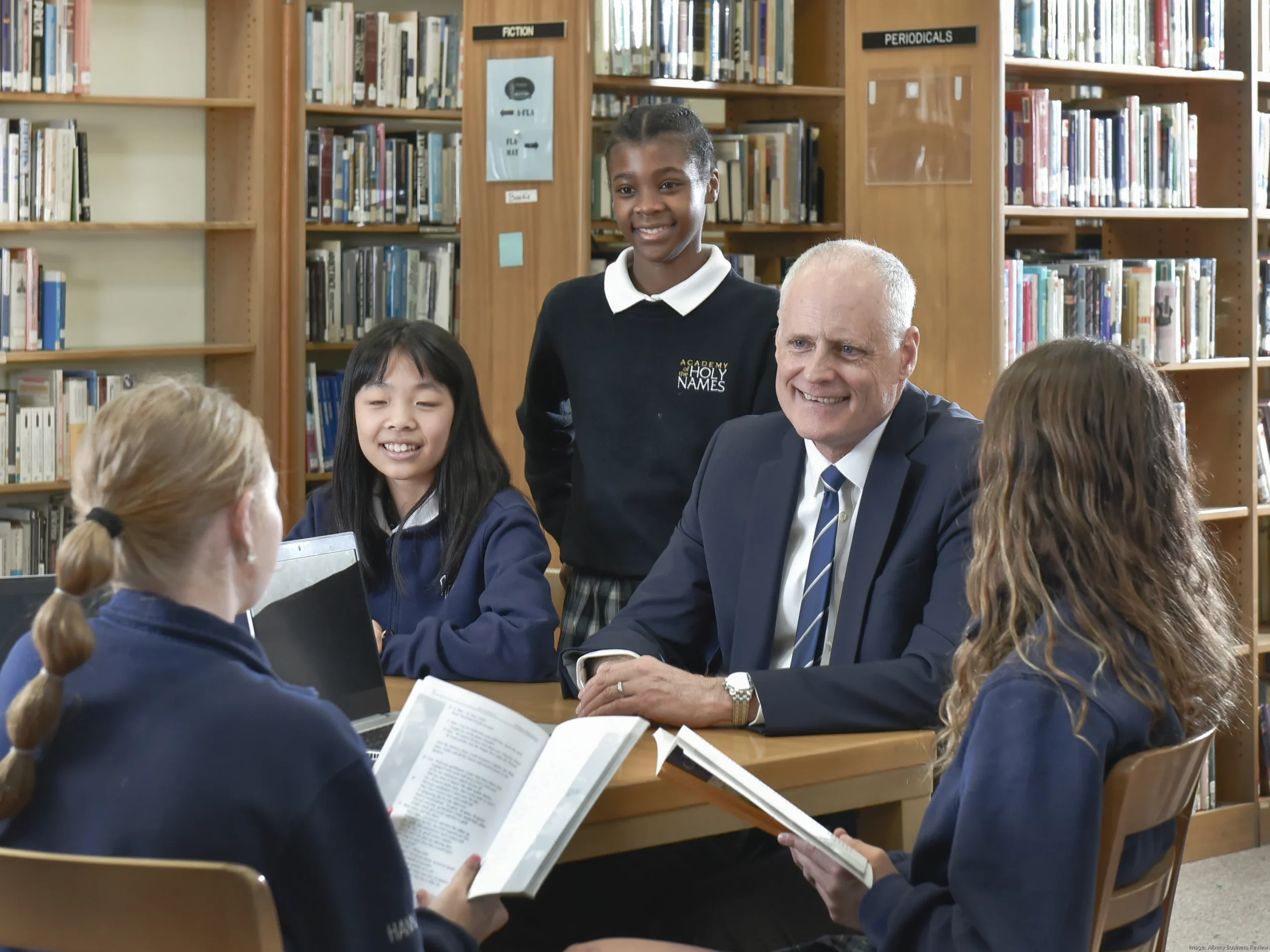
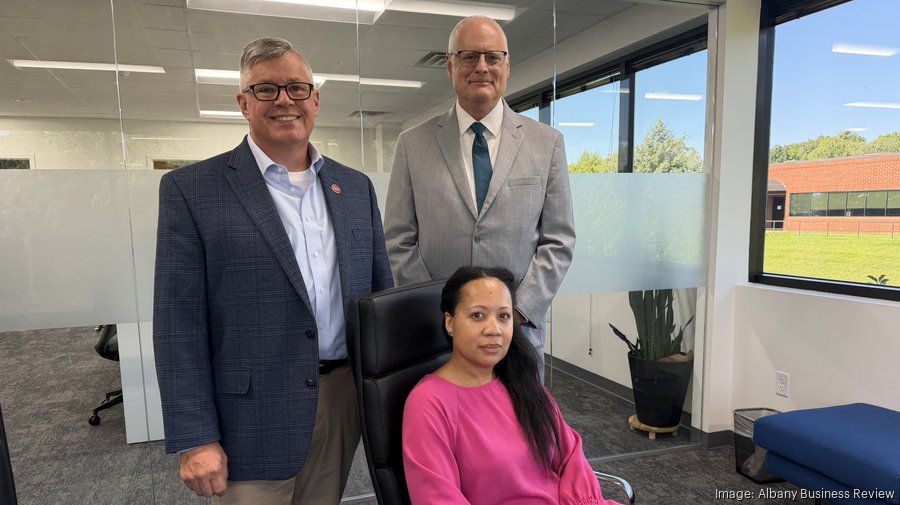
During a recent roundtable discussion, Turina Parker, district superintendent and CEO of WSWHE BOCES, Carl Mummenthey, superintendent of the Niskayuna Central School District, and Martin Kilbridge, Academy of the Holy Names president, shared how they’re adapting while preparing students for a future that is changing faster than ever.
What are the biggest challenges facing K-12 education right now?
Turina Parker: One of the things is the pace of change. We’re preparing kids for career fields that we don’t yet know what will exist, right? And so I think that things are just evolving so quickly.
Martin Kilbridge: I agree with Turina. I also see that in my experience, there’s been a decrease in trust in education, faith in the decisions of educators, whether it’s in the classroom or at the administrative level. So there are real challenges that we face in that regard.
Carl Mummenthey: We definitely are feeling the pain of the pace of change. I think that’s very real, and the erosion of public trust in in schools, in government, and in our civic institutions, I think, is also a very real challenge for schools. … Another one is just the sustainability of our systems. We are largely a state where schools are experiencing declining enrollment and escalating cost, and that’s a very hard equation to explain to our stakeholders, including our taxpayers.
Are students thinking differently about college and careers today?
Parker: Yeah, I think it’s changed. I think that’s evidenced by our increasing participation in career and technical education programs. When you introduce to kids opportunities beyond what’s in front of them, kids thrive on that.
Mummenthey: Niskayuna traditionally was very college focused, and still is very college focused. But we are seeing an increasing number of students that are opting for career and technical education, that are considering entrepreneurship after high school, that are entrepreneurs while they’re in high school, starting businesses and doing really neat things.
Parker: We’ve done a really good job of shifting the conversation from “either or” to “and.” I don’t feel like students feel like they have to decide: Am I going to college, or am I going to pursue a trade, or career, or am I going to go in the workforce? … I think the conversation becomes about success. And are we preparing students for success in whichever eventual path they choose? And that’s up to the individual child and their pathway. But our job is to set them up for success, whatever they choose.
Kilbridge: We had a student at 14 years old who said, “You know what, Holy Names is not the place for me. I want to become a mechanic.” And now, how many 14-year-olds know exactly what their career path is? She was amazing. She understood who she was, and she recognized that this is the path that she wants to take.
Mummenthey: Parents are increasingly aware of some of the student loan debt issues and the return on investment, and so they’re looking with a very critical eye, more than I’ve seen in the past 20 years, about the value of a two- or four- or graduate-level college education.
How is AI changing education?
Parker: I think that goes back to where I started with the pace of change. It certainly has complicated teaching and learning and instruction in the sense that it requires us to think differently about what it is that we need to prepare our students for, how we prepare our educators to prepare students, and how we utilize the tools that are available to us.
Kilbridge: I use AI almost every day. I work on spreadsheets and figuring out what kind of a formula is going to be helpful to me. But that critical eye is important, and there’s a wealth of knowledge that is available to people through AI, but you do need that critical lens, and you need the knowledge. … There are biases built into AI, and helping students understand the biases and understand that they can’t be using AI as a substitute for their own knowledge and presenting the results of AI as their own work, that’s a huge challenge.
Parker: My daughter was doing her homework one night and she said, “If you see me using AI, it’s because I’m supposed to, it’s part of the assignment.” Which is exactly what should be happening is teaching kids the right ways to use the tool set in front of them.
Mummenthey: In my world, I see AI as sort of shifting continuously on a continuum between threat and opportunity. And on any given moment of any given day, it’s somewhere on that continuum, and we’re either trying to combat it or to embrace it.
How has the role of business partnerships changed?
Parker: I think our relationship with them has evolved and has become critical in ways that it hasn’t been prior. What we used to see is our business community really being a partner in, after students graduate, being able to provide them with employment. Whereas now, what we see is it’s really critical that they are partners in helping students to be able to access visions of pathways that can be available to them to be able to learn skills that we can’t necessarily teach them in school.
Kilbridge: Making sure that we’re understanding what those critical skills are, critical thinking, the soft skills of communication, being adaptable. All of those things are things that the business community is telling us are essential skills for a workforce of the future.
Mummenthey: I think partnerships are going to become increasingly important, and both within and outside the sector. We partner with GE for a young engineers camp each summer. We partner right now with community-based nonprofits for the provision of universal pre-kindergarten services, and I think increasingly schools are going to be relying on building and sustaining those strong partnerships with the business and nonprofit community in order to advance our mission.
What can schools, businesses and higher education do together going forward?
Parker: What we need from them is just that continued engagement, continued willingness. … One of the things that we’re focusing on now is work-based learning experiences, so that all of our students in our five-county region have an opportunity to have a work-based learning experience in the field that they’re interested in, right in their home community.
Mummenthey: I think starting those types of interactions between our students and the business and trade communities much, much earlier, so that students are aware at a younger age of all that’s out there and the many opportunities that they can take advantage of. Business leaders are telling us, “You’re focused on 10 years ago, we’re focused on 10 years ahead.”
Parker: We’re all working toward the same goal, and the more we can find ways to partner and be innovative in the programming that we provide for kids, the stronger we are.
Mummenthey: I think higher ed’s business model, if you will, is also changing more rapidly than I’ve seen. They are focused. They’re focusing a lot more time and energy on workplace training, on career shifts, and how to support individuals who are making a shift in in careers, on micro credentialing.
What are the biggest financial and workforce pressures?
Mummenthey: When we think about recruitment and retention of teachers and staff, when we think about some of the same economic pressures that our families are experiencing in terms of utility costs and gasoline and diesel fuel and health insurance, I think there’s a real gap between what a quality education costs and what the revenue streams are able to sustain.
Parker: For us, I’ll speak regionally, it’s always wanting to provide cost-effective services for districts, and knowing that our districts might be limited in the number of students that they can send to a particular program.
Kilbridge: We need to focus on where the rubber meets the road, which is the classroom and the classroom experience. We need to think about how are we being lean and mean, and ensuring that our administrative structure is sufficient to support what’s going on in the classroom.
Turina Parker: We could expand. We could open up additional classrooms theoretically and serve even more students, but we just don’t have the staff.
Mummenthey: We need a pipeline with 20 qualified candidates for every open position.
Kilbridge: It is absolutely a real challenge, and the independent school world, we do not compete in terms of compensation with public schools. We’re having trouble finding qualified people who are willing to accept the salary compensation that we offer. But I would hope that the experience of being in education, the vocation piece of it, is something that would be an added attraction to someone who would be otherwise qualified to go into the private sector.
Mummenthey: Labor costs, including health insurance, retirement benefit costs, transportation, special education, and for the public schools, aging infrastructure because we went through cycles of growth and improvement and building, and those buildings are now 30, 40, 50, 60 years old, and in need of significant investment.
Discussion has been edited and condensed.